The unmistakable sound of a steam locomotive is something many people associate with a bygone era. In Koszalin, however, that history continues to live on thanks to a dedicated group of volunteers who have preserved one of Poland's oldest narrow gauge railways and returned a much-loved locomotive to working order.
Today, the Koszalińska Kolej Wąskotorowa is one of the city's most distinctive heritage attractions, and a chance to experience a journey through the West Pomeranian countryside while celebrating more than a century of local railway history.
A Railway Dating Back to 1898
The Koszalin Narrow Gauge Railway officially opened on 1 November 1898. Built with a 750 mm gauge, it quickly became an important transport link for communities across Central Pomerania, carrying both passengers and freight between towns and villages throughout the region.
During the 1950s, the railway was converted to a 1,000 mm gauge to accommodate newer rolling stock and changing operational requirements. At its largest, the network extended for around 180 kilometres, making it one of the region's most significant local transport systems.
Although much of the original network has disappeared over the decades, a preserved section between Koszalin, Manowo and Rosnowo continues to operate as a heritage railway, keeping an important chapter of the city's history alive.
Meet "Zośka"
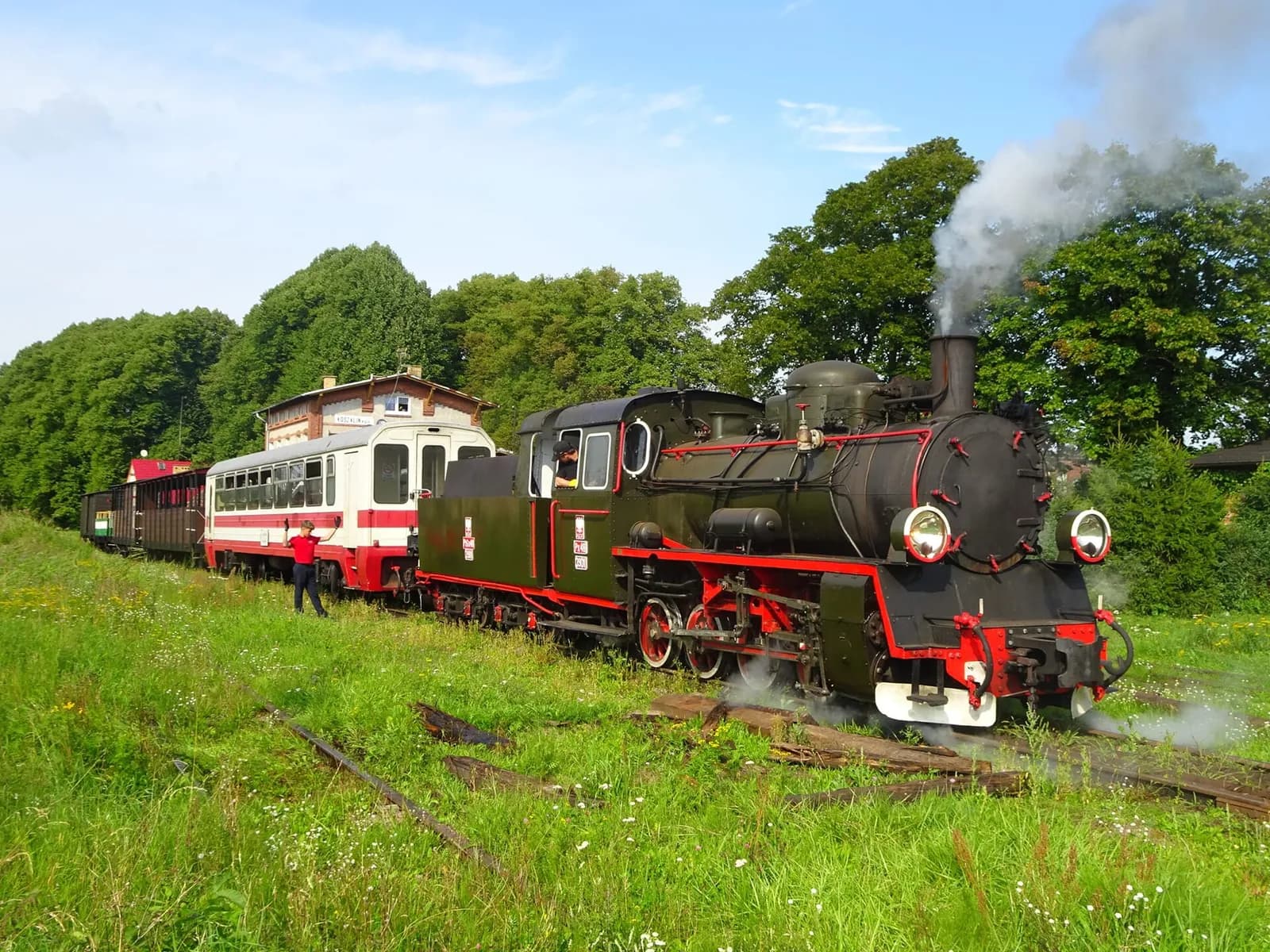
At the heart of the railway is Px48-3901, affectionately known as "Zośka".
Built in 1951 by Fablok in Chrzanów, the steam locomotive spent nearly three decades working on narrow gauge lines in Western Pomerania before eventually being withdrawn from service.
Rather than allowing the locomotive to fade into history, local railway enthusiasts undertook the lengthy process of restoring it. Following an extensive overhaul completed in Koszalin, Zośka returned to the railway in 2022, once again hauling passenger trains through the surrounding countryside.
Today, it is recognised as the only operational Px48 steam locomotive running on 1,000 mm gauge track in Poland, making it a particularly special attraction for railway enthusiasts and visitors alike.
Saved by Volunteers
Like many historic railways across Europe, the future of Koszalin's narrow gauge line was far from certain during the 1990s.
As regular railway operations came to an end, local volunteers and preservation groups stepped in to protect what remained of the line, the station buildings and the locomotive depot. Their efforts led to the railway infrastructure being entered into the register of historic monuments in 2000, safeguarding its future.
A new preservation society was later established to restore operations, and thanks to years of commitment from volunteers, heritage trains once again run from Koszalin during the tourist season.
A Living Part of Koszalin's Heritage
Unlike many preserved locomotives displayed in museums, Zośka remains a working engine. Watching the locomotive prepare for departure, hearing the whistle echo across the station and travelling through forests and lakeside scenery offers a reminder of how rail travel once connected communities across the region.
It is a source of local pride and an important piece of industrial heritage as well as a memorable way to experience the landscape while discovering a lesser-known chapter of Poland's railway history.
As heritage railways become increasingly rare, Koszalin's narrow gauge line demonstrates what can be achieved when history is preserved not simply as a museum exhibit but as a living attraction that continues to bring people together.
image credit: Bartek z Polski, Wikimedia Commons, public domain